There are lots of routes to leadership and many types of successful leader. But all leadership involves moving from the safety of doing work in fairly clear scope; to setting direction, getting stuff done through others, often in a more ambiguous context. That’s why creating the the right environment for success is key.
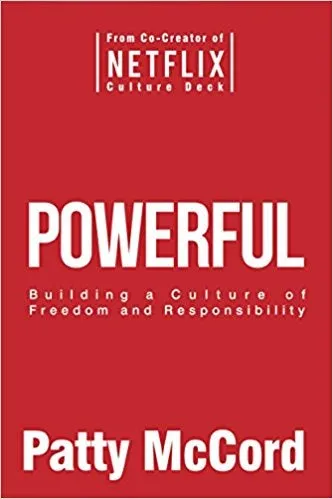
I’ve just finished reading Powerful by Patty McCord, the former Chief Talent Officer at Netflix. It’s a highly readable guide to developing a powerful company culture.
Simply put it’s one of the best business books I have read in long time. If you have ever found yourself asking why human resources can’t be more business-focused, you’ll welcome the commercial-savvy, honesty and humanity of the author herself an ex-HR professional.
As someone who’s been a marketer and now advises marketers, I quite often get involved in conversations about how to get the right talent onboard, organise marketing roles and structures, and improve team performance. These are all areas that can be underpinned by a really effective company culture.
McCord is clear that the culture of Netflix is based on freedom and responsibility. Unlike many she hates the term “empowerment”, instead arguing that people are inherently powerful. It isn’t the job of leaders to give employees power, but instead to create an environment that enables them to perform.
Netflix rented DVDs by post before getting into streaming
When the author joined Netflix it was a “proper” start-up – she describes a company developing at breakneck speed, exhilarating and nerve wracking, often scrappy and unprofessional. Now, Netflix has annual revenue of around $25bn, with many successive quarters of growth exceeding +20% and an operating profit of about 25%.
McCord emphasises that evolving businesses require an evolving culture. Indeed, that’s a theme that runs throughout the book – the right company culture is only there to support the business goals.
‘Powerful’ is organised into eight chapters – each is written around a simple philosophy that can easily translate to any company and help its leaders to cultivate a dynamic culture that improves performance.
Looking through the lens of a marketing leader, here are a few provocations based on the approaches in ‘Powerful’:-
Treat people like adults
Most management think that to get people to perform you have to motivate them (and then put a bunch of systems in place to keep a check on their performance). McCord turns this on its head. She says: be clear to the team about the business challenge (“a challenge they’ll relish”) and give them freedom to creatively problem-solve.
Aim for the leanest set of policies and rules, get rid of HR-led bureaucracy if it doesn’t directly contribute to business performance.
If you asked everyone to name the business’s top 3 priorities, what would they say?
How would you react to a tough, but fair, challenge to the current strategy?
Are the team genuinely excited by the business challenge & emotionally invested, or just playing along?
Communicate constantly about the challenge
Make sure everyone understands the business – and how it makes money. Be transparent & simple – say “here’s where we are & where we need to be”. Ensure communication flows freely up & down & across the organisation. Give people opportunities to learn (which they value); but don’t bother with the fripperies normally associated with cutting-edge workplaces like funky furniture & beer fridges.
How much do you try to shield your team from bad news from the ‘higher ups’?
How many of your team are operating entirely in their comfort zone? And are they learning anything?
Do you ever make use of perks or job titles as ‘consolation prizes’ to employees?
Practice radical honest
Demand honesty & demonstrate it in your own behaviour. Model giving and receiving feedback. Don’t do people the disservice of sugar-coating criticism. Do tell people how the business is really doing – regardless of whether it’s good or bad – people work better and feel valued if they know what’s really going on.
How comfortable is your business with disagreements?
To what extent do you have “pre-meets” to avoid conflict in actual meetings?
Do you feed back to employees in language a layperson would understand?
Debate rigorously
Encourage people to have strong opinions but based and argued on an understanding of the facts. McCord talks about the culture of challenge that so important to develop and build ideas within Netflix. This included setting up forums to debate and routinely asking people to prepare and argue a case that they did personally support.
Deploy the right questions to separate fact from opinion – for example “can you help me understand what leads you to believe that is true”.
Try to deal in facts as much as possible, but not be hamstrung by data. In the case of Netflix that means recognising that insights from data complement the team’s decision-making, but do not dictate it.
Although data insights help Netflix make most of its programming decisions, McCord highlights that some hugely successful commissions like ‘Orange is the New Black’ relied on judgements than ran counter to the data.
To what extent do you give the team the answer & ask them to work back from there?
Are you over-reliant or under-reliant on data in decision-making?
What happens in your team when someone makes a judgment call which later turns out wrong?
Relentless focus on the future
McCord paraphrases former US defence secretary Rumsfeld “you go to war with the army you have, not the army you might want or wish to have at a later time”. Her point is to always be planning the time for the skills you think you’ll need in 6+ months’ time – that may mean that today’s team isn’t 100% right for your future needs.
Do you know what skills and capabilities you’ll need in 6-12 months’ time?
If you started with a blank sheet of paper, how many of your team would you recruit today?
What support do you need from your boss, HR, etc, to move towards the organisation you need?
Someone really smart in every job
McCora’s advice is to have fewer better and people that are well-paid, than a bloated organisation chart. To this end, the author is not a fan of ‘employee retention’ metrics because by definition they prioritise keeping people over achieving the right mix of skills for the business.
McCora also highlights how other HR-inspired models strangle agility – such as bell curves for performance, quotas for how many employees are considered ‘stars’ and having strict salary bands in place which mean a firm cannot pay market (or above market) rates for people. The annual appraisal process comes in for strong criticism. Indeed, several large organisations including Netflix have ditched them, instead requiring frequent & informal conversations about performance.
Do corporate HR initiatives ‘remove the oxygen’ from frequent, informal conversations about team & individual performance?
How much value are your current ‘engagement’ initiatives delivering? What would really make a difference to individuals?
Compensation is a judgement call
McCord emphasises the importance of diverse thinking as contributor to a culture of freedom and responsibility. Netflix tends to pay well although it doesn’t set out to benchmark itself at a particular percentile versus the market average. McCord talks a lot about having the freedom to attract the best talent, but equally about the importance of not wasting money on perks that employees won’t value. As throughout the book, there is a strong emphasis on creating a meritocracy – of rewarding star employees well, but also of actively managing people out where there aren’t the right capabilities or cultural fit.
How easy do you find it to recruit the right people (internally or externally)? Why?
Do you ever find yourself “playing games” with budget & headcount (i.e. for reasons that aren’t 100% linked to business performance)?
The art of good-byes
Fittingly this is the final chapter of the book, in which McCord explains the circumstances of her own highly amicable departure from Netflix, and continuing friendship with its founder Reed Hastings. The key message here is not to fear ‘goodbyes’ – they are inevitable in an evolving business. And every business must evolve. Her belief in the importance of treating people with honesty and fairness leads McCord to criticise the way in which most companies use performance improvement plans. In her eyes they are most often used to prove bad performance and justify exit; rather than making any honest attempts to address performance issues.
To what extent is ‘retention’ a driving metric in your business?
When staff move in/up/out of the organisation, are you typically planning or responding to events?
How many ex-employees would still sing the praises of you & your business?
‘Powerful’ is just that. Highly recommended reading for those already in – or aspiring to – positions of leadership. McCord’s insights from her impressive time at Netflix are simple, relevant, and actionable.