Right now, I’m going through a weird phase of finding nuggets of wisdom in really old books.
We may have a few dynamic years ahead of us. And given the adage that history often rhymes, I figure we shouldn’t automatically discount texts that are a century old.
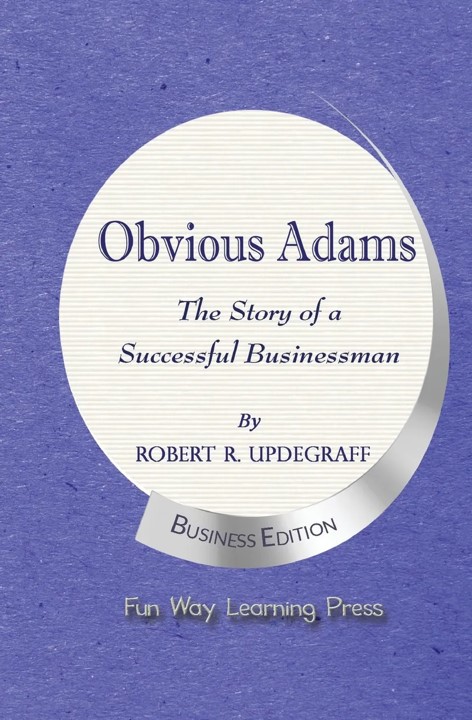
Yesterday I saw one of Rory Sutherland’s Instagrams in which he mentions a 1916 story called ‘Obvious Adams’ by Robert Updegraff. Today, Amazon delivered a copy. One bath later, I’d already finished this pint-sized book.
There are 3 parts to my edition, each being only a handful of pages long.
The first is a short story about an unremarkable young man, nicknamed Obvious Adams, who succeeds in the advertising industry. He excels – against the odds – because he has a rare skill of seeing and fixating on what’s hiding in plain sight.
The book’s central theme is that ‘obvious and simple’ are almost always the best path. But as the author highlights, these values are frequently overlooked in favour of more ‘complex and clever’ explanations.
In his unlikely ascendency, the main character assumes nothing, challenges hidden assumptions, and avoids what he calls the “astigmatism of lesser businessmen”.
The second part is a collection of five “Tests of Obviousness” which the author suggests can be applied to qualify observations and make better decisions in business.
The final section contains five “Creative Approaches” that people can deploy to problem-solve or influence others.
I won’t rehash the suggestions here, otherwise the blog will become longer than the book itself.
Instead, will simply conclude that there’s a lot of “uncommon” sense packed into this gem which is as relevant now as it was over a century ago.