
| In my work I help people with the challenge of figuring out what matters for their brand or business – we might get there through strategy development, coaching, sounding board, thinking partnership or, quite often, some combination of these. Consultants typically help on a single dimension – for example by providing a process the client can use to write a strategy. But that can be too myopic. I believe it’s more helpful to consider more of the factors that could support (or hinder) a leader’s ability to discern and execute on their “meaningful few”. It’s in this context that I want to highlight one that I think is rarely discussed – perhaps because, in the same way that a fish that doesn’t consider the water it swims in, people are so immersed in it, they cant see it. That factor is chronic stress. Unsurprisingly clients that have achieved leadership positions are almost always highly motivated, conscientious and hard-working. They have to deal with myriad pressures that come with the job – like navigating changing consumer or competitive landscapes; managing people; influencing up, down and across the business; the short-term pressure to deliver numbers today coupled with charting longer term strategy. In other words, they (perhaps you?) are perfect candidates for harbouring chronic stress.
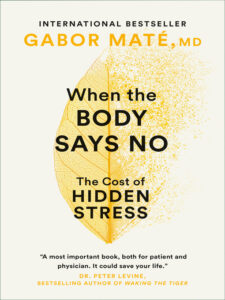
I recently read “When the Body Says No: The Cost of Hidden Stress” by Gábor Maté a truly fascinating and incisive book. The core idea is that chronic stress (and/or supressed emotions) can significantly contribute to the onset and progression of disease. Disease is the body “saying no” when the mind cannot. Chronic stress is stress experienced over a long period (like a dripping tap) rather than an event that more obviously triggers an acute fight/flight response (a pipe bursting). Maté shows the scientific connection between stress and disease. Namely that chronic stress dysregulates the body’s physiological systems (hormones, immune function, nervous system). This increases vulnerability to conditions such as cancer, autoimmune diseases, multiple sclerosis, irritable bowel syndrome, gastrointestinal reflux, and heart disease. Too abstract? If this sounds rather too abstract from the business of leading a team or organisation, just remember that to achieve your professional and personal goals, you must survive – or at least remain healthy – long enough to do so. According to the author, there are a number of “stress-prone” traits such as compulsive caretaking, difficulty saying no, need for approval, hyper-responsibility, and too often putting others’ needs before your own. These are common traits in industry – indeed they are often indirectly celebrated and rewarded. The marketing function could be an especially fertile ground for chronic stress because of the ambiguity and pressure of preparing for an uncertain future; the importance of cross-functional collaboration to get stuff done; the prevalence of multi-tasking and resourcing trade-offs; and, dare I say, a nagging concern that marketing must constantly justify its functional contribution. I recognise these chronic stress character traits in myself and in many clients. Of course, stress is not per se a bad thing. It provides motivation and drive – without which very little would be achieved in a business. Commercial implications But unacceptable levels of chronic stress are a commercial handicap. Besides the unsettling longer term personal health implications already mentioned, there’s a large body of evidence from psychology, neuroscience, and organizational research which shows stress impairs creativity, problem-solving, innovation and productivity. These are big impediments in a business context where strategic thinking and collaboration are key. Sociopaths excepted, we all want good health for our colleagues, and ourselves. But preventing a heart attack happening in 10 years’ time, seems pretty distant compared with the reality of delivering today, this month, this year. So – perhaps the most salient way to tackle harmful chronic stress in our businesses, is by winning the argument on the immediate – commercial – benefits of nurturing a highly functional human team. Questions for you
|