
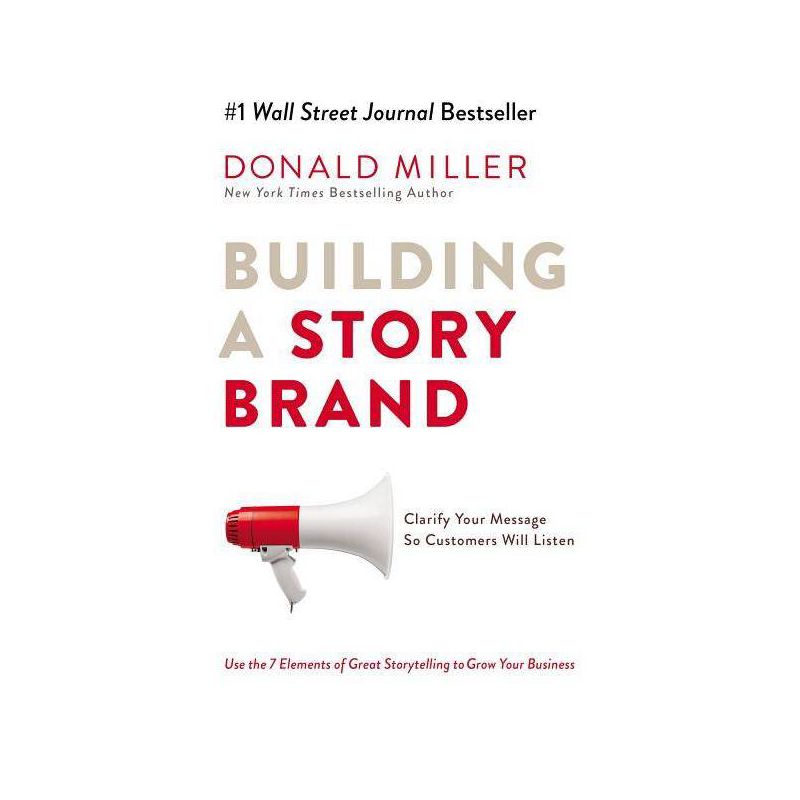
“I may not be much, but I’m all I think about”. These words by novelist Annie Lamott describing her own life struggles, also allude to the pitfalls of excessive introspection.
If there is a dragon to be slayed in ‘Building a Story Brand’ by Donald Miller then it is that of introspection in brand management.
Miller argues that, however earnestly developed, too many businesses miss sales opportunities because they present a self-interested message to customers, rather than succinctly explaining how they can help.
If your initial reaction – like mine – was “well duh … that’s bleeding obvious”, please reserve judgement.
The power in this book is in the application. Miller uses the formula of the ‘story arc’ to propose a formula that can be used to tell a compelling story placing the customer – not your brand – in the role of hero.
The author says marketing often justifies its reputation as a “money pit” because (i) marketers fail to focus on how their offer helps a customer survive and thrive, and (ii) they make customers “burn too many calories” trying to decipher brand messages into something meaningful to them.
Miller describes all the ingredients of a successful story. When you have this formula in mind, you realise how widely used it is. It becomes difficult to watch any TV show or movie without recognising these ingredients as they appear and contribute to the development of the story.
There is not an adequate substitute for reading the book (which is well-structured, but conversational).
However, in summary, the story arc as applied to a brand goes like this:
A character (your customer)
Has a problem (in marketing lingo, a “job to be done”)
And meets a Guide (your business or brand)
Who gives them a plan (show them how your offer solves their problem)
And calls them to action (close the sale or suggest next steps)
That ends in success or helps them avoid failure (the beneficial outcome)
Each step does include several additional components to clarify the marketer’s thinking, but in essence this is the approach.
The most obvious marketing use for the story framework is in developing a brand’s positioning, then how that positioning shows up in execution across communications touchpoints.
But, it’s also something that teams can use in other ways – like presentations or training.
Essentially, EVERYONE that we want to influence is just a customer looking to solve a problem. Miller’s framework helps us avoid the tendency for marketing introspection and recognise who’s the real hero of the story.