
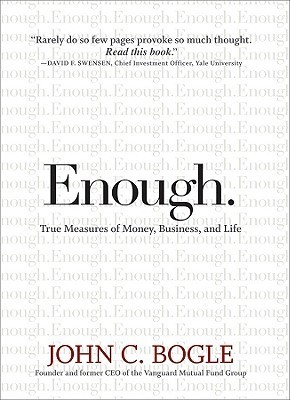
Enough

John Bogle is considered one of the giants of the investment world in the 20th century. Bogle passed away in 2019 at the age of 89. But through Vanguard, the investment firm he founded and ran for decades, his legacy lives on. It’s a legacy that empowers and enriches millions of people worldwide whilst simultaneously terrifying active fund managers.
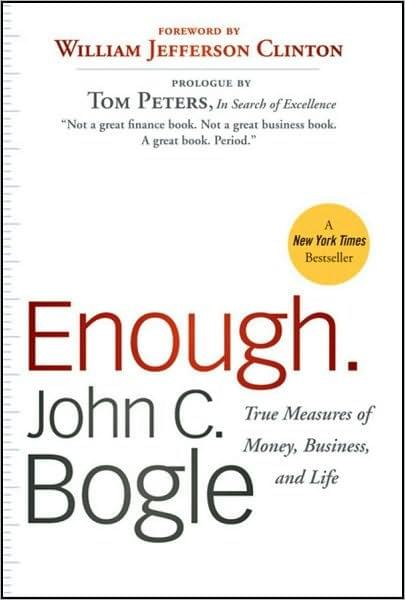
“Enough” is not your average business book. Instead it’s a semi-autobiographical journey, through which the reader gets a superb understanding of the values that drove Bogle, how those manifested in the creation of Vanguard & its revolutionary funds.

Humble beginnings

Bogle was born in 1929 in New Jersey, US. His early life was profoundly affected by the Great Depression, during which his family lost their money and home, his father became an alcoholic which led to his parents’ divorce.
On academic merit, Bogle was able to secure a place at Princeton University where he studied economics and investment. His studies included writing a thesis on the economic role of investment companies.

In 1955 the unassuming and straight-talking Bogle started working at the Wellington Fund, and within 15 years he was its chairman. An “unwise” merger led to his being fired and in 1974 he founded Vanguard.

Turning point
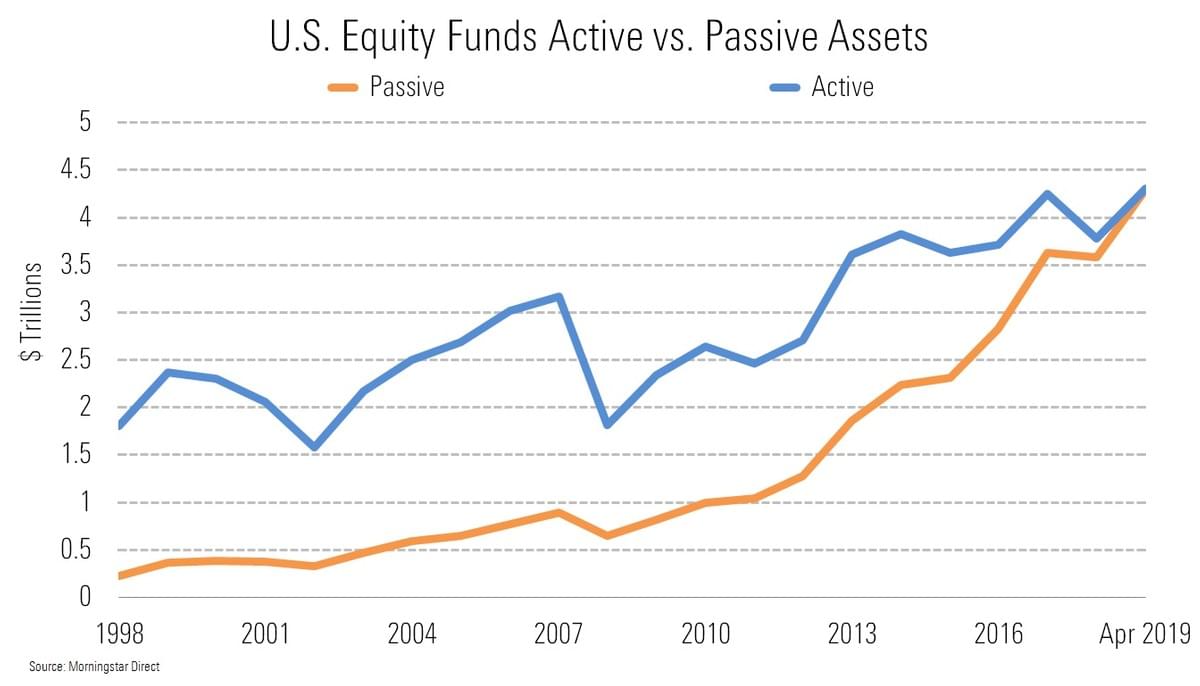
1975 saw the launch of Bogle’s Vanguard index-tracker which, from its own humble beginnings, would slowly but fundamentally change the landscape of retail investing in the US, then internationally.
Bogle’s view was that most investment (or mutual) funds are run in a way that prioritised the short-term benefits of investment managers, not individual investors. Most funds have ‘rock star’ managers who try and “beat the market” but very few do so consistently. Funds trade shares frequently (expensive) rather than hold stocks long term, meaning that investors over-pay for under-performance.
Bogle’s index tracker sought to mimic the performance of the stock market – not beat it – and do so at substantially lower annual cost, leaving more of the investors’ money invested and allowing capital growth to compound further.
Passive investing (using index trackers with ongoing costs as low as 0.1%) has grown from a standing start to be around the same size as actively-managed funds (where annual costs of 2% are common)
Scathing
Bogle doesn’t mince his words when it comes to criticising the lack of ethics and long-term thinking in financial service and by extension, right across modern business.
He argues that the financial services industry causes social harm and has in aggregate depleted – rather than increased – value for society and for investors. Investors, he notes, “feed at the bottom of a tremendously complex and expensive food chain of investing”.
Over the last 45 years Vanguard has been run differently. It operates on lower cost base than competitors, the product range is simpler and transparent, staff are incentivised in a way that reflects its customer interests. Plus, you get the sense that Bogle’s own values permeate the organisation – those of frugality, honesty, and behaving ethically.
It is telling that at his death, Bogle, one of the most powerful figures in global finance, had a net worth of ‘only’ $180m compared with Abigail Johnson the CEO of Fidelity (a competitor investment firm founded by her grandfather) with $16 billion.
The book underscores Bogle’s belief in using broad-based measures of success, not just financial. His record of philanthropy and the book’s own title speak to his view that beyond a certain point, income growth delivers diminishing incremental benefit for the individual and that we have a moral responsibility to support causes other than our own.
Money – business – life
Short of reading the book, there is probably no better way to provide a flavour of Bogle’s guiding principles than to reproduce the chapter titles.

Money

  • Too much cost, not enough value
  • Too much speculation, not enough investment
  • Too much complexity, not enough simplicity

Business

  • Too much counting, not enough trust
  • Too much business conduct, not enough professional conduct
  • Too much salesmanship, not enough stewardship
  • Too much management, not enough leadership

Life

  • Too much focus on things, not enough focus on commitment
  • Too many 21st-century values, not enough 18th-century values
  • Too much “success”, not enough character


My takeouts
First, the book’s structure tells the Vanguard story in the context of the investment industry, then extrapolates those ideas into business generally, and ultimately, the characteristics and behaviours that make for great leadership.
It is truly US-centric in many of its cultural and practical references. However, its relevance is not restricted to any one geography.

I think there are many lessons that we as business & marketing leaders can take out. My top 3 are:

  • The only approach that’s successful in the long term is to put the customer centre-stage and deliver something that’s genuinely valuable to them.
    Vanguard’s innovative index tracker made many millions of people richer than they would otherwise be and it’s a product so effective that its since been copied (begrudgingly) by most major competitors.
  • The back office must be organised to support the front-line message.
    How many firms are truly hardwired to deliver the brand proposition?  Vanguard was created and grew in Bogle’s image.  The elements are coherent, from the founder’s philosophy through to the product range, marketing communications and how “crew members” are incentivised.  (Vanguard is named after Nelson’s ship and nautical analogies abound!)
  • Values count, as well as value.
    As AI steals our jobs, humans will need to focus on what they’re best at.  Our integrity, values, and emotional intelligence will become among the things that set us apart as effective leaders.  In chapter 7, Bogle includes his ten rules for building a great organisation, illustrating each with examples from Vanguard.

In conclusion

It’s amusing to listen to a finance veteran ripping apart his own industry with the calm precision of a professional assassin. Even more so when you consider how disruptive this unassuming individual’s index-tracking products have been to the investment management status quo (and inflated profit margins).
The style of Enough won’t suit everyone. You might not like its US-centricity, occasional religious references, or storytelling. However I found it a thought-provoking read. Every chapter is not only crammed with wisdom and authority, but also a great deal of humility.

Latest insights

Resource: Energy Inventory

Resource: Energy Inventory

Energy Inventory self-score questionnaire - a free-to-download resource. Click to open: ENERGY INVENTORY DEC26

Quotes about discernment

Quotes about discernment

"Avoid the superficial, penetrate the complex, go to the heart of the problem, and pinpoint the key factors” Bruce Lee   “A 'no' uttered from...

In a world of noise, complexity, and competing agendas, the leaders who win are those who cut through — simplifying smartly, then acting with clarity and conviction.

If that’s what you’re aiming for, let’s talk. No pitch, just a genuine conversation with someone who’s been in your shoes.