The Culture Code – building highly effective teams

I’ve read a quite a few leadership books and one quality indicator is my ‘Doh!’ test. The Doh test is entirely unscientific. It’s the moment when I read something and immediately realise how I could have done something differently for a better outcome.

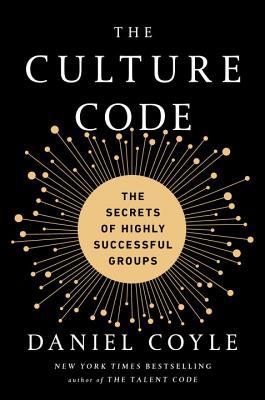
The Culture Code by Daniel Coyle is subtitled ‘The secrets of highly successful groups’. The book examines the team-building skills that have led certain teams to achieve extraordinary success. It’s a short and highly readable book, but one where the principles are underpinned by proper research – not purely opinion. And for me it contained a few important ‘Dohs’.
Coyle begins with a primer on group behaviours. A group of pre-school kids is pitted against Harvard graduates in a contest to build the tallest tower possible out of dried spaghetti and sticky tape. The test has been repeated many times (you may have experienced a variation in team-building exercises) and the kids always outperform the graduates by a factor of about 2x.
This is the first of several examples where Coyle challenges our preconceptions about what high performing teams look like. He highlights that in a “grown up” context – like business – we are so concerned about our individual performance and working out roles within the group dynamic, that we’re distracted from creative problem solving.
Business professionals often give the illusion of sophistication and collaboration but are mainly involved in what the author describes as “status management” activity. Coyle argues that instinctively we focus on the wrong details – on individual skills not the interactions between team members.
The rest of the book is divided into the three ‘skillsets’ that, when applied, drive improvements in team interactions.


Skillset 1 – Build safety

The author explores ways in which leaders and teams can create an environment where people feel safe and a sense of belonging to the team. This skillset is brought to life with diverse and interesting examples – from Google to the Christmas truce to the US army.
One of favourite sections is one where Coyle highlights how effective teams can recognise, call out and quickly deal with negative behaviours. ‘Bad apples’ are team members the introduce a negative energy into the team; they might be a ‘Jerk’ (aggressive, defiant), ‘Slacker’ (withhold effort) or ‘Downer’ (the depressive ‘Eeyore’ type). The author highlights the importance and behaviours of ‘good apples’ – team members who are great at spotting and neutralising negative behaviours.


Skillset 2 – Share Vulnerability

The leader rarely has all the answers, in fact the underlying assumption is that she or he is often the least well-equipped to solve problems. To facilitate problem-solving, they must set the tone for the whole team by showing their own vulnerability the goal is to encourage a greater sense of interference and cooperation between team members.
Coyle gives several examples of where sharing vulnerabilities has led to better outcomes, than if the traditional ‘boss knows best’ culture had prevailed. One example is the crash landing of a United Airlines flight, where unconventional cooperation between pilots and a passenger saved 285 lives after catastrophic mid-air engine and hydraulics failures. A great example, but I wish I hadn’t been 7 miles above the Atlantic when I read it.
The author goes into some detail about how Pixar use what they call BrainTrust meetings to create a safe environment where new films are pulled part and improved with completely candid feedback. This is often not a pretty process. Parallels are drawn to the Spaghetti exercise where unstructured, even chaotic, frequent interactions and feedback are key to success.


Skillset 3 – Establish Purpose

We’ve heard a lot about purpose in the business world, some of it meaningful and sincere, some hollow or superficial. Coyle highlights that every team or organisation has a purpose whether its recognised or not. Purpose is not necessarily the words on a plaque, but what behaviours suggest the team believe the goal/s to be.
Successful cultures create and sustain purpose, and often they’re forged in moments of crisis. Simply put, purpose is the shared answer to ‘this is where we are’ and ‘this is where we’re going’. Using purpose as a compass, people are empowered to make better, quicker, more focused choices.
One example – good but old – is the Johnson & Johnson Tylenol pharmaceuticals recall – a classic case study in ethical disaster management that has become the ‘gold standard’ for brands ever since. We learn how the J&J team were able to navigate an overwhelming number of complex decisions, by reference to the company’s well-embedded credo about putting parents and patients first.


The book includes some practical tips on how story telling can be used to trigger a shared purpose (not just reflect it). To that end, Coyle shares an example from Portugal’s hosting of the European Championships in 2004. At the time, the behaviour of English hooligans was the scourge of almost every international football match.

Faced with almost inevitable carnage and having bought millions worth of riot weaponry, the organisers enlisted the help of an unconventional riot expert from Liverpool called Clifford Stott.

Stott focused on creating a series of small cues aimed at telling a different ‘story’ to English fans about the role of the organisers and local police. The details of the ‘Hug-a-Thug’ approach are worth reading and the results were outstanding.

The Culture Code is an easy & enjoyable read. It can help us as business leaders to examine what our true team role should be and how we can create the environment in which others interact and cooperate for better performance.

At Brand Ambition we help marketing leaders create conditions for their teams to thrive and perform. If you have a organisation, team capability or culture challenge, get in touch for an informal chat.

Latest insights

Resource: Energy Inventory

Resource: Energy Inventory

Energy Inventory self-score questionnaire - a free-to-download resource. Click to open: ENERGY INVENTORY DEC26

Quotes about discernment

Quotes about discernment

"Avoid the superficial, penetrate the complex, go to the heart of the problem, and pinpoint the key factors” Bruce Lee   “A 'no' uttered from...

In a world of noise, complexity, and competing agendas, the leaders who win are those who cut through — simplifying smartly, then acting with clarity and conviction.

If that’s what you’re aiming for, let’s talk. No pitch, just a genuine conversation with someone who’s been in your shoes.