Four lanes of vehicles travel past a billboard in my hometown, moving at anything between 0- 40 miles per hour.
Besides this major road, the media owner has just replaced a static 48-sheet site with a fancy digital billboard.
The first rotation of ads is a masterclass in advertising execution.
AI defines this ad format as a “glance medium” enjoying perhaps 3–6 seconds viewing time. Creative that works best in this context has:
- One dominant visual
- Minimal copy (6–8 words max)
- High contrast
2 weeks’ exposure at a site like this might cost about £3k, and a campaign may include 50 prime sites … so an advertiser may be investing £150k or more for a fortnight’s presence.
Look at the examples below and have a ponder about whose Finance Director will be happiest.
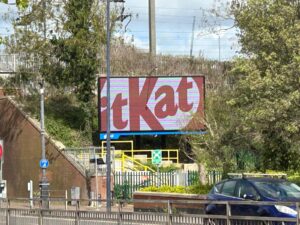
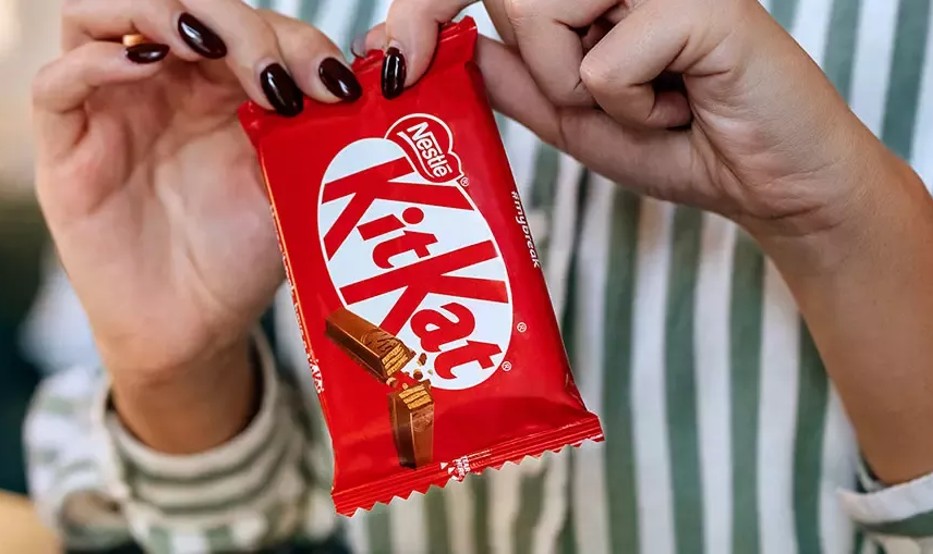
Exhibit A – a campaign from Nestle’s Kit Kat brand making confident use of the famous logo (distinctive brand asset) plus a subtle visual joke for the eagle-eyed.
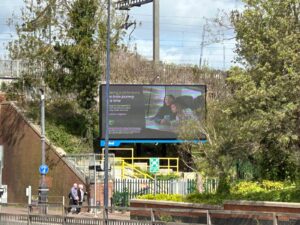
Exhibit B – National Rail – this is presumably a re-formatted press ad, talking about how taking the train is as good for the planet as not boiling a kettle 455 times. There’s also a temporary ‘reimagining’ of their logo in various shades of green. But you, like the passers-by, probably can’t see any of that.
The stated goal of the second campaign is to endear National Rail to Gen Z. And I bet a lot of effort has gone into the diagnostic work and strategy.
But the outcomes of that strategy are automatically limited by execution that ignores basic advertising principles.
Sometimes the simplest way to succeed, is not to fail.